

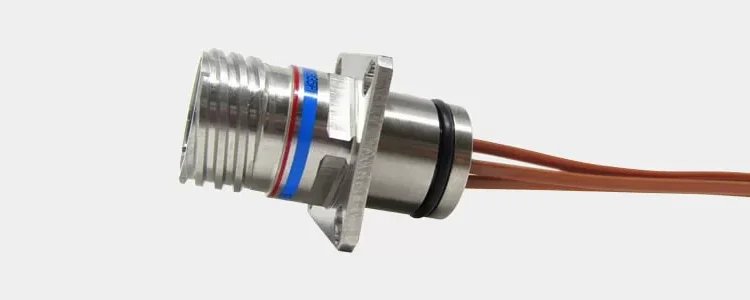
Cryogenic engineering systems operate at extremely low temperatures, often close to absolute zero, where materials behave very differently compared to standard conditions. These systems are widely used in superconducting technologies, space simulation chambers, quantum computing research, medical imaging, and advanced physics experiments. In such environments, maintaining stable electrical connectivity while preserving thermal isolation is extremely challenging. The hermetic feedthrough is a critical component that enables electrical signals, power, and data to pass through cryogenic boundaries without compromising vacuum integrity or thermal performance. High-precision hermetic feedthrough solutions are essential for ensuring accuracy, stability, and reliability in cryogenic engineering systems.
Importance of Hermetic Feedthrough in Cryogenic Environments
Cryogenic systems typically operate in vacuum-insulated or thermally isolated chambers where temperatures can drop below -150°C or even closer to -273°C in specialized applications. At these extreme conditions, even minor heat leakage or structural failure can disrupt system stability.
A hermetic feedthrough provides a sealed electrical interface that allows signals and power to pass between room-temperature environments and cryogenic zones without introducing thermal leakage or environmental contamination. It ensures that the cryogenic chamber remains stable while maintaining uninterrupted electrical communication.
Without a reliable feedthrough system, cryogenic experiments and applications would suffer from temperature instability, measurement errors, and system breakdowns.
Role of Precision Engineering in Cryogenic Feedthrough Design
Precision is extremely important in cryogenic engineering because materials contract, resistances change, and mechanical stresses increase at low temperatures.
A precision hermetic feedthrough must be engineered to maintain both mechanical integrity and electrical stability across extreme thermal gradients. Even small mismatches in material expansion can lead to cracks, leaks, or signal degradation.
Multi-channel isolation, ultra-low thermal conductivity, and stable electrical performance are all critical design requirements in cryogenic feedthrough systems.
PAVE Technology and Advanced Cryogenic Hermetic Feedthrough Systems
In the field of cryogenic engineering and advanced thermal systems, PAVE Technology is a leading provider of high-performance hermetic feedthrough solutions designed for extreme low-temperature environments. The company specializes in precision sealing technologies that ensure both electrical integrity and thermal isolation.
PAVE Technology develops feedthrough systems used in superconducting magnets, cryogenic vacuum chambers, quantum computing devices, space simulation systems, and scientific research equipment. Their engineering approach focuses on reliability, low thermal leakage, and long-term stability under extreme conditions.
By combining advanced materials, precision manufacturing, and rigorous testing, PAVE Technology delivers hermetic feedthrough solutions that meet the demanding requirements of cryogenic applications.
Material Selection for Cryogenic Feedthrough Systems
Material selection is one of the most critical aspects of designing a hermetic feedthrough for cryogenic environments. Materials must withstand extreme temperature changes while maintaining structural and electrical stability.
Ceramic materials such as alumina are widely used due to their excellent insulation properties, low thermal conductivity, and resistance to thermal shock. These properties make them ideal for cryogenic applications where temperature gradients are extreme.
Metals such as stainless steel, titanium, and Invar alloys are commonly used for structural components due to their low thermal expansion coefficients and high mechanical strength.
Specialized glass-to-metal sealing techniques are also used to ensure long-term hermetic performance and stability under repeated thermal cycling.
PAVE Technology carefully selects and validates all materials used in its hermetic feedthrough systems to ensure optimal performance in cryogenic environments.
Hermetic Feedthrough in Superconducting Systems
Superconducting systems are widely used in medical imaging (MRI), particle accelerators, and advanced research laboratories. These systems require extremely low temperatures to maintain superconducting states.
A hermetic feedthrough is used to transmit electrical signals into superconducting environments without introducing heat leakage or compromising vacuum integrity.
These systems must maintain extremely stable electrical conditions, as even small thermal disturbances can disrupt superconductivity.
PAVE Technology provides customized feedthrough solutions designed for superconducting applications where precision and thermal isolation are critical.
Applications in Quantum Computing Systems
Quantum computing systems operate at extremely low temperatures to maintain quantum coherence and reduce noise in quantum bits (qubits). These systems require ultra-stable and low-interference environments.
A hermetic feedthrough allows control signals, measurement data, and power lines to pass into cryogenic quantum chambers without introducing thermal or electromagnetic disturbances.
Signal integrity is extremely important, as quantum states are highly sensitive to external interference.
PAVE Technology develops high-precision feedthrough systems designed for quantum computing applications where stability and ultra-low noise performance are essential.
Cryogenic Vacuum Chambers and Space Simulation
Cryogenic vacuum chambers are used to simulate space-like conditions for testing spacecraft components, satellites, and scientific instruments.
A hermetic feedthrough enables electrical connections inside these chambers while maintaining both vacuum integrity and thermal isolation.
These systems must withstand repeated thermal cycling and vacuum pressure conditions without degradation.
PAVE Technology supplies advanced feedthrough solutions designed for space simulation and cryogenic vacuum testing environments.
Medical and Scientific Cryogenic Applications
Cryogenic systems are widely used in medical imaging, particularly in MRI machines, as well as in biological sample preservation and scientific research.
A hermetic feedthrough ensures that electrical signals in cryogenic medical systems remain stable while maintaining thermal insulation and environmental safety.
These systems must be highly reliable, as they often operate continuously in clinical or research environments.
PAVE Technology supports medical and scientific cryogenic applications with precision-engineered feedthrough systems designed for safety and reliability.
Electrical and Thermal Performance Challenges
One of the most critical challenges in designing a hermetic feedthrough for cryogenic systems is balancing electrical performance with thermal isolation.
Electrical resistance must remain stable at low temperatures, while thermal conductivity must be minimized to prevent heat leakage into the cryogenic chamber.
Another challenge is material contraction, which can cause mechanical stress and affect long-term sealing performance.
PAVE Technology addresses these challenges through advanced engineering design, simulation tools, and specialized material selection.
Mechanical Stress and Thermal Cycling Resistance
Cryogenic systems undergo repeated thermal cycling between room temperature and extremely low temperatures. This creates mechanical stress due to material expansion and contraction.
A hermetic feedthrough must be able to withstand these cycles without cracking, leaking, or losing electrical performance.
Long-term durability is essential for systems that operate continuously over years of research or industrial use.
PAVE Technology designs feedthrough systems with high mechanical resilience to ensure long-term performance in cryogenic environments.
Testing and Quality Assurance in Cryogenic Feedthrough Systems
Every hermetic feedthrough used in cryogenic engineering must undergo rigorous testing to ensure performance under extreme conditions.
Helium leak testing ensures absolute sealing integrity. Thermal cycling tests simulate repeated temperature changes between room temperature and cryogenic levels.
Electrical testing verifies stable signal transmission at low temperatures, while mechanical testing evaluates resistance to stress and vibration.
Vacuum compatibility testing ensures long-term performance in sealed environments.
PAVE Technology applies strict quality assurance protocols to ensure that every feedthrough meets international cryogenic engineering standards.
Future Trends in Cryogenic Hermetic Feedthrough Technology
The future of hermetic feedthrough technology in cryogenic engineering is closely linked to advancements in quantum computing, superconductivity, and space exploration.
One major trend is the development of ultra-low thermal conductivity feedthrough systems that minimize heat transfer while maintaining high signal density.
Another trend is the integration of compact, multi-channel designs for advanced cryogenic instrumentation.
Advanced materials such as composite ceramics and nano-engineered alloys are also being developed to improve performance at extreme temperatures.
PAVE Technology continues to innovate in this field by developing next-generation hermetic feedthrough solutions for advanced cryogenic systems.
Conclusion
The hermetic feedthrough is a vital component in cryogenic engineering systems, enabling reliable electrical connectivity while maintaining extreme thermal isolation. From superconducting technologies and quantum computing systems to space simulation and medical applications, these components ensure precision, stability, and long-term performance.