
How Sound Panel Placement Influences Sound Behaviour in Different Room Types

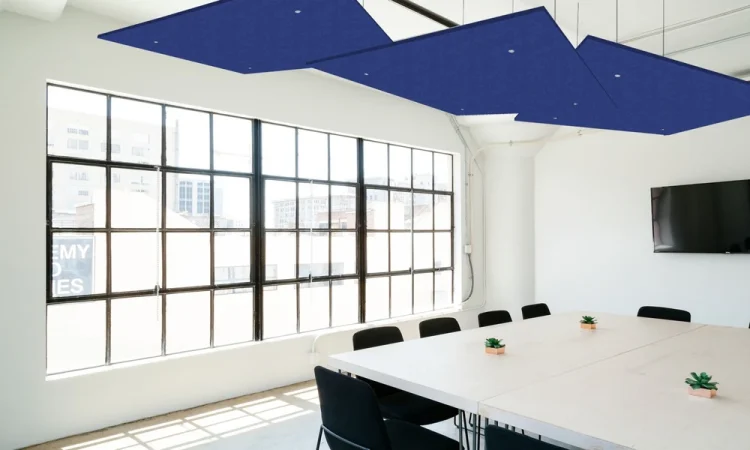
Spend a bit of time in different indoor spaces, and you’ll start to notice something subtle but important. Two rooms can look almost identical in size and layout, yet feel completely different once people start talking. One feels easy to be in, while the other feels slightly overwhelming after a while.
That difference often comes down to how sound behaves in the room, and more importantly, where sound panels are placed.
It’s easy to assume that simply adding sound panels will solve noise-related issues. In reality, placement plays a much bigger role than most people expect. The same panels, installed in the wrong locations, can have minimal impact. Positioned correctly, they can completely change how a space feels.
Why placement matters more than quantity.
A common mistake in acoustic treatment is focusing on how many panels are installed rather than where they go.
Sound doesn’t spread evenly across a room. It reflects off specific surfaces, travels along predictable paths, and builds up in certain areas more than others. These are known as reflection points.
If panels aren’t placed along these key paths, sound will continue to bounce around untreated surfaces. That’s why a few well-positioned acoustic panels often outperform a larger number installed randomly.
Understanding this principle is the starting point for effective acoustic design.
First reflection points and sound control.
When someone speaks, sound travels outward in all directions. Some of it reaches the listener directly, while the rest reflects off nearby surfaces like walls and ceilings before arriving slightly later.
These early reflections can interfere with clarity. They don’t sound like distinct echoes, but they can make speech feel less defined.
Placing sound panels at first reflection points helps reduce this effect. These points are typically:
- Side walls at ear level
- Ceiling areas above conversation zones
- Walls directly facing the sound source
Treating these areas helps maintain clarity without removing the natural presence of sound in the room.
Open-plan offices: managing spread and overlap.
Open-plan offices present one of the biggest acoustic challenges. With fewer walls to contain sound, conversations and movement can spread across the entire space.
In this type of environment, panel placement focuses on breaking up sound paths rather than blocking them completely.
Wall panels are often installed near workstations and shared areas where conversations happen most. Ceiling panels or suspended baffles are used to intercept sound travelling across the room.
Instead of concentrating panels in one area, they are distributed strategically. This helps reduce how far sound travels and prevents it from building up in certain zones.
The goal is not silence, but a more controlled and balanced environment.
Meeting rooms: improving speech clarity.
Meeting rooms rely heavily on clear communication, so panel placement is more focused and deliberate.
Panels are typically installed on walls facing each other to reduce direct reflections. The wall behind the main speaker is also an important area, as it can reflect sound back into the room.
Ceiling panels are often added above the table to manage vertical reflections. This is especially useful in rooms with hard ceilings.
By targeting these specific areas, sound panels help ensure that speech reaches listeners directly, rather than being distorted by multiple reflections.
Restaurants and cafés: controlling build-up.
In hospitality spaces, the challenge isn’t just individual reflections. It’s the cumulative effect of many people talking at once.
Sound panels are usually placed across ceilings and high wall sections where reflections are strongest. Large, uninterrupted surfaces are a priority, as they contribute most to sound build-up.
Spacing is also important. Instead of clustering panels together, they are spread across the space to maintain consistent acoustic control.
This approach helps keep sound levels more even, even as the space becomes busier.
Residential spaces: defining zones without walls.
In modern homes, especially open-plan layouts, sound panel placement is often used to create separation between areas.
Panels may be installed near seating areas, behind televisions, or along walls shared by different zones. This helps contain sound within specific parts of the home.
Ceiling panels can also be used above dining or living areas to reduce vertical reflections.
The aim is to create a sense of separation without physically dividing the space. Proper placement makes each area feel more distinct, even in a single open room.
High ceilings and large spaces.
Rooms with high ceilings or large volumes behave differently when it comes to sound. There’s more space for sound to travel, which can lead to longer reverberation times.
In these cases, ceiling placement becomes more important. Suspended panels or baffles help intercept sound before it reflects down into the room.
Wall panels alone may not be enough, especially if they’re installed too low. A combination of wall and ceiling treatment usually delivers better results.
Corners and overlooked areas.
Corners are often ignored during installation, but they can contribute to sound build-up, especially for lower frequencies.
While not always necessary in every commercial setting, treating corners can improve overall balance in certain environments like studios or specialised workspaces.
Other overlooked areas include:
- Walls behind large furniture
- Long, uninterrupted corridors
- Glass partitions
Addressing these surfaces can further refine how sound behaves in a space.
Balancing function and design.
Panel placement isn’t purely technical. It also needs to align with the overall design of the space.
In many projects, panels are arranged in patterns or aligned with architectural features. This allows them to blend in visually while still serving their acoustic purpose.
The challenge is finding the right balance. Panels need to be placed where they’re most effective, but also in a way that complements the interior design.
When done well, they become part of the space rather than an obvious addition.
Common mistakes in panel placement.
Even with good intentions, there are a few common mistakes that can reduce effectiveness:
- Installing panels too high or too low, missing key reflection points
- Concentrating panels in one area instead of distributing them
- Ignoring ceilings in spaces with high reverberation
- Focusing only on aesthetics without considering sound paths
Avoiding these issues can make a significant difference in the final outcome.
Final Thoughts
Sound panel placement has a direct impact on how sound behaves in any room. It’s not just about adding acoustic treatment but about understanding where it will be most effective.
Different room types require different approaches. Offices need to manage sound spread, meeting rooms focus on clarity, hospitality spaces deal with build-up, and homes benefit from better separation between zones.
When panels are placed with intention, they don’t just reduce unwanted reflections. They help shape the overall acoustic experience of a space, making it more comfortable and easier to use in everyday situations.
That’s what turns a well-designed room into one that truly feels right.