

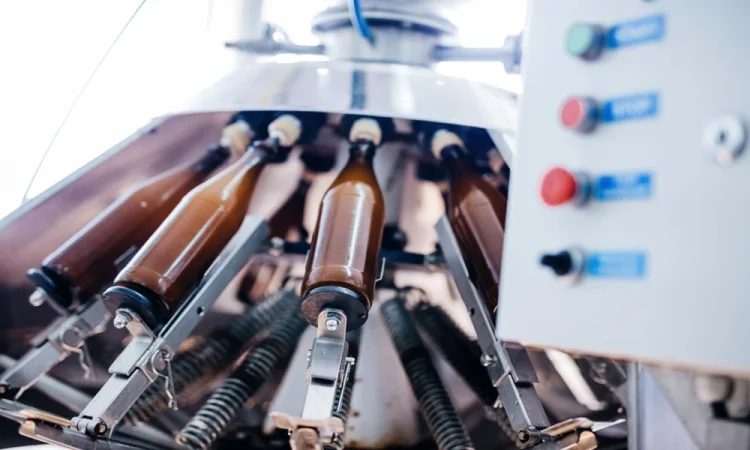
Capping sits at the very end of most filling lines, and it’s tempting to think of it as a simple mechanical afterthought once the harder problem of getting product into the container has been solved. In practice, a poorly executed capping step undoes much of the value of an otherwise well-run filling line, since a loose or cross-threaded cap risks leakage, contamination, and product loss between the factory floor and the point where a customer actually opens the container.
The Role of Capping in Product Integrity
A cap does more than close a container; it forms the seal that keeps a product safe from contamination, prevents evaporation or oxidation during storage and transport, and, for many products, provides the tamper evidence that assures a customer the container hasn’t been opened before purchase. For liquid products particularly, an inadequate seal can lead to leakage during transport, which damages packaging, contaminates surrounding stock, and creates a return or complaint that costs far more to resolve than the capping step itself would have cost to execute properly the first time. Products with any sensitivity to oxygen or moisture depend even more heavily on a consistent, reliable seal, since a marginal capping defect that wouldn’t matter for a shelf-stable product can meaningfully shorten shelf life for something more sensitive.
Cap Types and the Mechanisms That Apply Them
Screw caps, snap-on caps, and press-fit closures each require a different mechanical approach to apply correctly and consistently. Screw capping machines rotate the cap onto threaded container necks, applying controlled torque to achieve a proper seal without cross-threading or over-tightening to the point of cracking the container or cap. Snap-on and press-fit caps instead rely on a controlled downward force to seat the cap against a sealing lip, which demands precise alignment and force control rather than rotational torque. A look at automatic capping systems built around these different closure mechanisms shows how the choice of cap type early in packaging design directly determines what kind of capping equipment a line needs downstream, since retrofitting a line built for screw caps to handle snap-on closures usually isn’t a simple adjustment.
Torque Control and Seal Consistency
For screw-cap applications, torque control represents one of the more technically demanding aspects of automatic capping, since too little torque leaves a cap loose enough to leak or work free during transport, while too much torque can crack a container, strip threads, or damage the cap’s sealing surface. Pneumatic capping heads apply torque through controlled air pressure and typically include a clutch mechanism that slips once the target torque is reached, protecting both container and cap from over-tightening. Servo-driven capping systems offer even finer control, allowing torque profiles to be programmed and adjusted precisely for different cap and container combinations, which matters on lines that run multiple products with different closure requirements through the same equipment.
Matching Capping Speed to Upstream Filling
A capping machine has to keep pace with whatever fills ahead of it on the line, and mismatched speeds between filling and capping create a bottleneck regardless of how efficient either individual station is on its own. If capping runs slower than filling, containers queue up and risk spillage or tipping while waiting; if it runs faster, the capping station sits idle between batches, which isn’t harmful but does suggest the line wasn’t balanced correctly during design. Line designers need to account for this balance from the outset, sizing capping equipment to match the filling station’s actual throughput rather than its rated maximum speed, since real-world filling speed often runs below the specification sheet once product-specific factors like viscosity are accounted for.
Capping and Export or Regulatory Requirements
Products shipped across borders or sold into regulated categories such as food, pharmaceuticals-adjacent goods, or certain chemicals often carry specific packaging integrity requirements that trace back directly to how reliably a cap seals the container. A shipment that arrives with even a small percentage of leaking or loosely capped containers can trigger a rejected consignment, a costly return shipment, or a compliance review that delays future orders from the same buyer. Automatic capping equipment that holds consistent torque and seal quality across an entire production run gives exporters a more defensible basis for the packaging integrity claims they make to overseas customers or regulators, compared with a manual process where seal quality varies from one container to the next depending on which operator was capping at the time. This consideration often carries more weight in export-oriented manufacturing than the labor savings alone, since a single rejected shipment can cost far more than the capping equipment itself.
Common Failure Points in Manual Capping
Manual capping introduces variability similar to manual filling: an operator’s grip strength, attention, and fatigue level all influence how consistently caps get seated and tightened across a shift. Cross-threading is a particularly common manual capping failure, where a cap starts onto the container neck at a slight angle and either seals poorly or damages the threads entirely, and this kind of defect often isn’t caught until a customer opens a leaking container well after the product has shipped. Automating the capping step removes this specific failure mode almost entirely, since a properly calibrated capping head positions and applies the cap the same way on every cycle, regardless of how many hours into a shift the line has been running.
Capping deserves the same engineering attention that filling receives, since a well-dosed container with a poorly applied cap still represents a failed package from the customer’s perspective. Line designers and plant managers evaluating capping equipment should think through cap type, required torque or force control, and how capping speed balances against upstream filling, treating the capping station as an integral part of line design rather than a simple mechanical add-on bolted onto the end of the process.